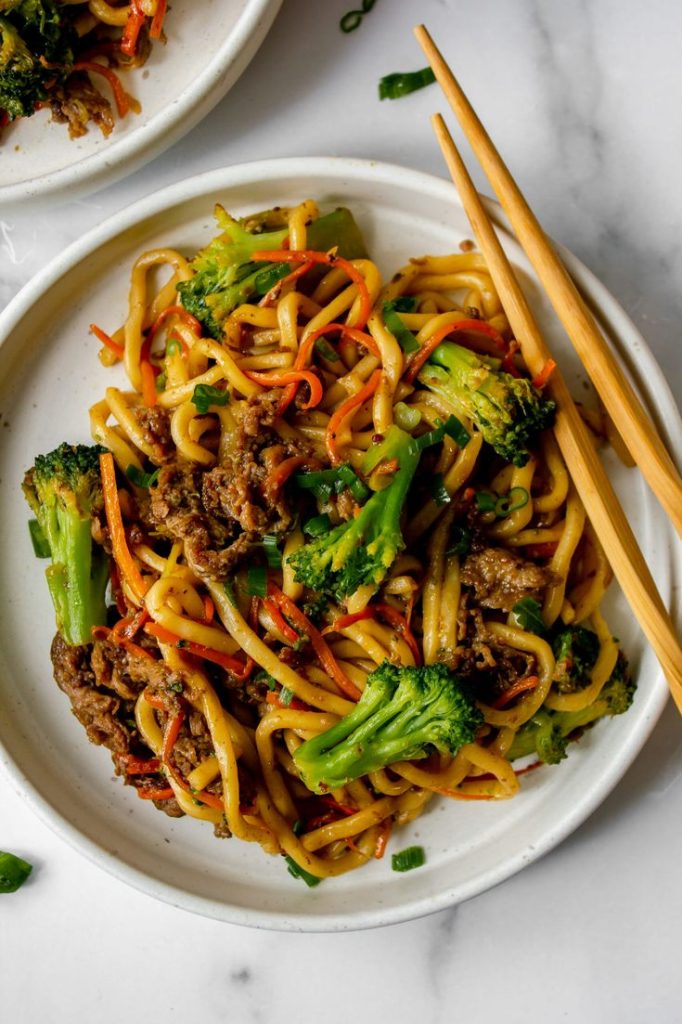
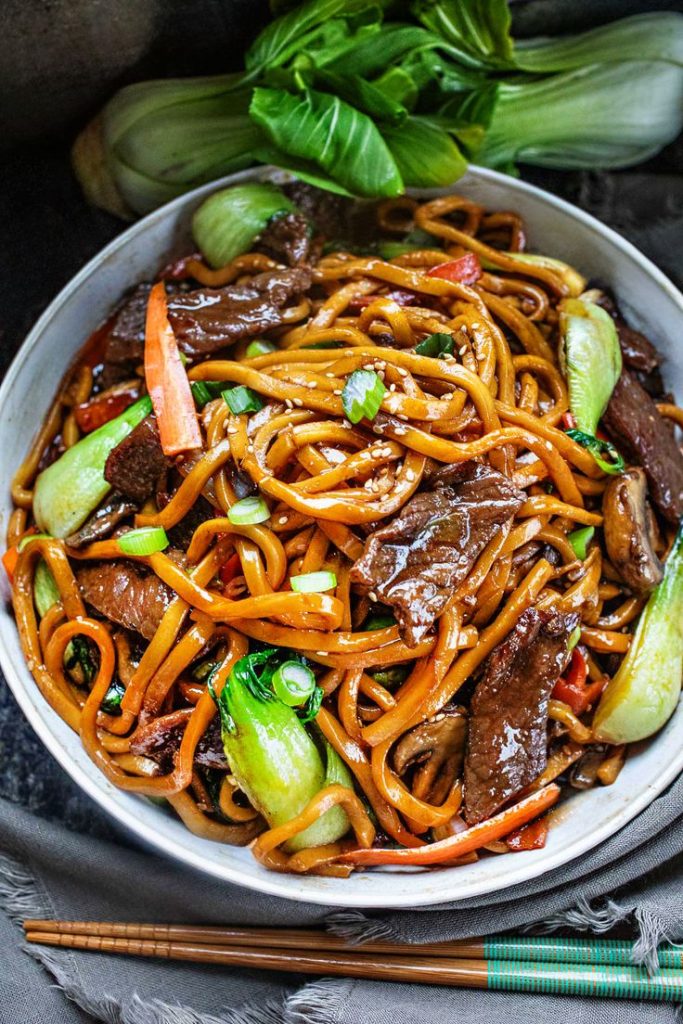
Bulgogi Beef Udon Stir Fry is a bold, savory, and satisfyingly chewy noodle dish that blends the rich, marinated flavors of Korean bulgogi beef with thick, slurpable udon noodles and stir-fried vegetables. This one-pan meal is quick to prepare but delivers layers of umami flavor—thanks to a soy-sesame marinade, tender beef, and a medley of stir-fried onions, carrots, and greens.
Inspired by classic Korean bulgogi, this version introduces a Japanese twist with udon noodles, turning it into a hearty weeknight stir fry that’s perfect for busy dinners, meal prepping, or cozy nights in. With its sweet and savory sauce, hints of garlic and ginger, and seared beef that caramelizes beautifully in the pan, this dish is a crowd-pleaser that comes together in just about 30 minutes.
For more hearty comfort meals, check out Old-Fashioned Ground Beef Goulash and Dutch Oven Pork Chops.
Credit: Pinterest
Ingredients You Will Need
For the Bulgogi Marinade & Beef:
- 1 lb thinly sliced beef ribeye or sirloin
Tender and quick-cooking, perfect for soaking up bold bulgogi flavor. - 1/4 cup soy sauce
Adds rich umami depth to the marinade. - 2 tablespoons brown sugar
Balances the saltiness with gentle sweetness. - 1 tablespoon sesame oil
Adds toasty, nutty richness. - 2 teaspoons rice vinegar or mirin
Provides acidity to tenderize and brighten the beef. - 1 tablespoon grated garlic (2–3 cloves)
For a bold, aromatic foundation. - 1 tablespoon grated ginger
Adds warmth and subtle heat. - 1/4 teaspoon black pepper
Enhances and rounds out the marinade.
For the Stir Fry:
- 2 tablespoons neutral oil (vegetable or canola)
Used for high-heat searing of beef and vegetables. - 1 medium onion, thinly sliced
Adds sweetness and body. - 1 medium carrot, julienned or thinly sliced
Brings color and slight crunch. - 2 cups baby spinach or bok choy
Mild greens that cook quickly and soak up flavor. - 2 packs (7–8 oz each) fresh or frozen udon noodles
Thick, chewy noodles that pair perfectly with saucy stir fry. - 1–2 green onions, chopped (for garnish)
Bright, fresh finish. - 1 teaspoon toasted sesame seeds (optional)
Adds texture and nutty aroma on top.
Cooking Time
- Prep Time: 15 minutes
- Cook Time: 15 minutes
- Total Time: 30 minutes
- Serves: 3–4
Equipment You’ll Need
- Large skillet or wok
- Mixing bowl
- Cutting board and knife
- Tongs or wooden spatula
- Measuring spoons and cups
- Pot for blanching noodles (if using frozen udon)
How to Make Bulgogi Beef Udon Stir Fry: Step-by-Step
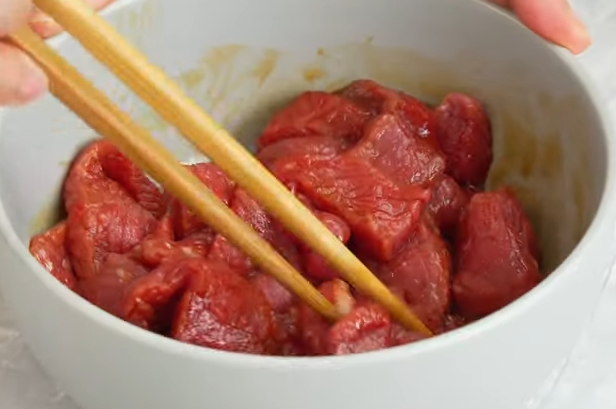
1. Marinate the Beef
In a mixing bowl, combine the soy sauce, brown sugar, sesame oil, rice vinegar, garlic, ginger, and black pepper. Add thinly sliced beef and toss to coat thoroughly. Let it marinate for at least 10–15 minutes (or up to overnight in the fridge). This allows the beef to absorb deep flavor and become tender.
2. Prepare the Udon Noodles
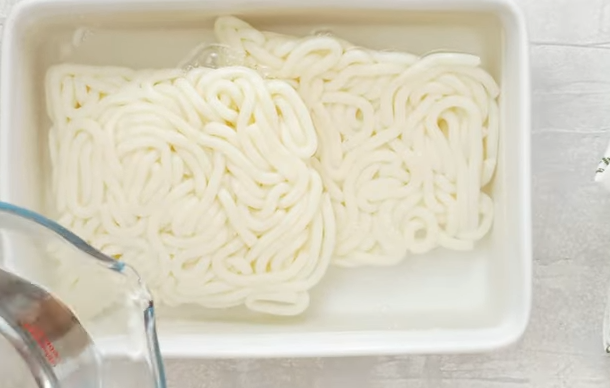
If using frozen udon, bring a pot of water to a boil and blanch the noodles for about 1–2 minutes until loosened. Drain and rinse under cold water. Set aside. Skip this step if using shelf-stable pre-cooked udon.
3. Sear the Marinated Beef
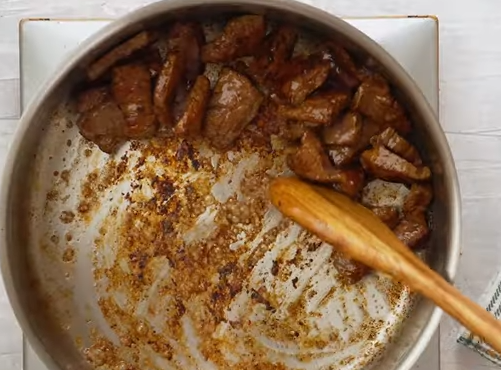
Heat 1 tablespoon of oil in a large skillet or wok over high heat. Add the marinated beef in a single layer (work in batches if needed) and sear for 2–3 minutes until nicely browned and caramelized. Remove and set aside.
4. Stir-Fry the Vegetables
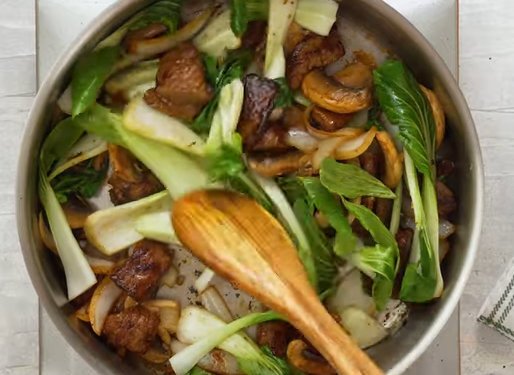
In the same skillet, add another tablespoon of oil if needed. Sauté the onions and carrots over medium-high heat for 2–3 minutes until just tender but still slightly crisp. Toss in the greens and stir until wilted, about 1 minute.
5. Add Noodles and Combine
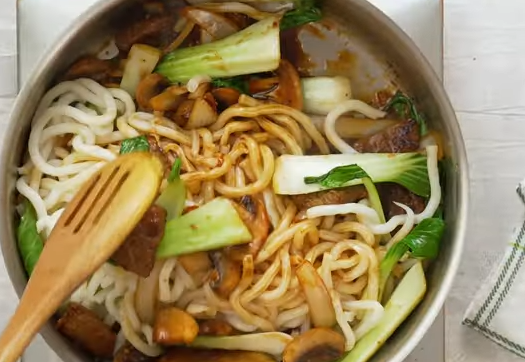
Add the prepared udon noodles and seared beef back into the pan with the vegetables. Stir-fry everything together for another 2–3 minutes. Add a splash of soy sauce or reserved marinade if you want extra sauce. Toss until noodles are evenly coated and heated through.
6. Garnish and Serve
Turn off heat. Garnish with chopped green onions and a sprinkle of sesame seeds. Serve immediately while hot and glossy.

Nutritional Information (Per Serving)
- Calories: 510
- Protein: 28g
- Fat: 18g
- Carbohydrates: 56g
- Fiber: 3g
- Sugar: 10g
- Sodium: 890mg
- Cholesterol: 60mg
Tips and Variations
- Make It Spicier: Add a teaspoon of gochujang or red pepper flakes for heat. A drizzle of chili oil also adds a nice kick.
- Vegetable Boost: Add sliced bell peppers, mushrooms, or shredded cabbage for more texture and nutrition.
- Swap the Protein: Substitute beef with thinly sliced chicken, pork, tofu, or even shrimp for different versions.
- Gluten-Free Option: Use tamari in place of soy sauce and swap udon for gluten-free rice noodles.
- Extra Saucy: Double the marinade ingredients and add some to the stir fry as a sauce if you like it more glazed.
How to Store and Reheat
Refrigerator:
Store cooled leftovers in an airtight container for up to 3 days.
Freezer:
Not recommended due to the texture of udon noodles after thawing, but the marinated beef can be frozen separately.
Reheat:
Reheat in a skillet with a splash of water or broth over medium heat, stirring until warmed through. Microwave in 1-minute bursts if you’re in a rush.
Why You’ll Love This Recipe
This Bulgogi Beef Udon Stir Fry delivers all the rich, bold flavor of Korean bulgogi in an easy, approachable format. The beef is tender and flavorful from the marinade, the noodles are satisfyingly chewy, and the veggies add freshness and crunch. Everything cooks in one skillet, which means less cleanup and more time enjoying your meal.
It’s a dish that feels indulgent yet simple—perfect for weeknights, great for meal prep, and totally customizable depending on what you have on hand. Plus, the combination of Korean and Japanese influences makes it an exciting twist on traditional stir fry.
Final Thoughts
When I crave something comforting but don’t want to spend hours in the kitchen, this Bulgogi Beef Udon Stir Fry is a go-to. It brings restaurant-level flavor with minimal effort and just the right balance of sweet, savory, and umami. I love how the noodles soak up the beefy juices and how quickly the whole dish comes together.
Whether you’re cooking for yourself or feeding a crowd, this meal is guaranteed to impress. Just serve it with some kimchi or a quick cucumber salad on the side, and you’ve got a flavor-packed feast that hits all the right notes.
Credit: Pinterest
Frequently Asked Questions
Can I use dry udon noodles?
Yes, just cook them according to the package instructions and rinse before stir-frying.
What if I don’t have mirin or rice vinegar?
You can substitute with a splash of apple cider vinegar or a bit of lemon juice.
Can I make this ahead of time?
Yes! Marinate the beef the night before and cook everything fresh the next day. It also reheats well for lunch.
Is this dish spicy?
Not by default, but it’s easy to spice up with gochujang, red pepper flakes, or chili oil.
Can I use pre-marinated bulgogi beef?
Absolutely—it saves time and still delivers great flavor. Just watch the salt content as store-bought versions can be saltier.
Craving more cozy one-pot comfort? Try this Slow Cooker Chicken Stew.


bulgogi beef udon stir fry
Ingredients
Method
- Marinate the Beef:
- In a bowl, combine all marinade ingredients. Add the beef slices and toss well to coat. Cover and refrigerate for 30 minutes (or up to 2 hours for deeper flavor).
- Cook the Udon Noodles:
- Prepare udon according to package instructions. If using frozen, rinse under warm water to loosen. Drain and set aside.
- Stir Fry the Vegetables:
- Heat oil in a large skillet or wok over medium-high heat. Add onion, bell pepper, and carrots. Stir fry for 2–3 minutes until just tender.
- Cook the Beef:
- Push veggies to the side and add marinated beef. Spread it out and let it sear for 1 minute without stirring. Then stir-fry with veggies until fully cooked, about 2–3 minutes.
- Add Udon and Sauce:
- Add noodles to the pan along with soy sauce and sesame oil. Toss everything together until noodles are coated and heated through, about 1–2 minutes.
- Finish and Garnish:
- Sprinkle in green onions and sesame seeds. Serve immediately, hot and fresh!
Notes
- Make it spicy: Add extra gochujang or crushed red pepper flakes to taste.
- Pear substitute: If you don’t have pear, apple or a bit of pineapple juice can work in the marinade.
- Storage: Store leftovers in an airtight container in the fridge for up to 3 days. Reheat in a skillet with a splash of water or soy sauce.